
Affordances#
“An affordance is a relationship between the properties of an object and the capabilities of the agent that determine just how the object could possibly be used.” - Don Norman
A simple example of affordance would be cutlery. Their long shape naturally induce how it should held, as well as in which cases they should be used. For example a spoon’s curved bowl affords scooping and holding liquids, while a knife’s sharper shapes affords cutting.

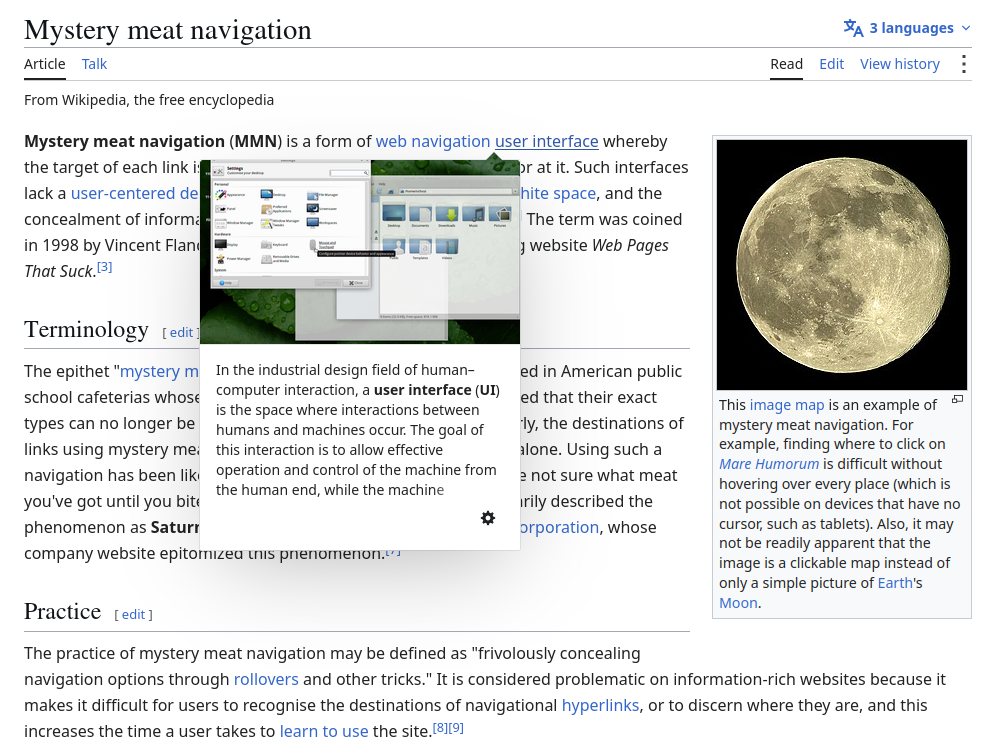
A case of bad affordance is the mystery meat navigation. It is when a component of a web page is hidden until the user hovers his mouse on it. For example when articles are being refered to on Wikipédia, you can see a preview when hovering on their title. This is useful for a user on a computer, but it doesn’t work for a user on a smartphone. It would be difficult to solve this problem, but maybe it could be tackled by using a feature of the touchscreen. Something like a “zooming” motion could be a way to tell if the user wants to see the preview of an article.
Gestalt Laws#
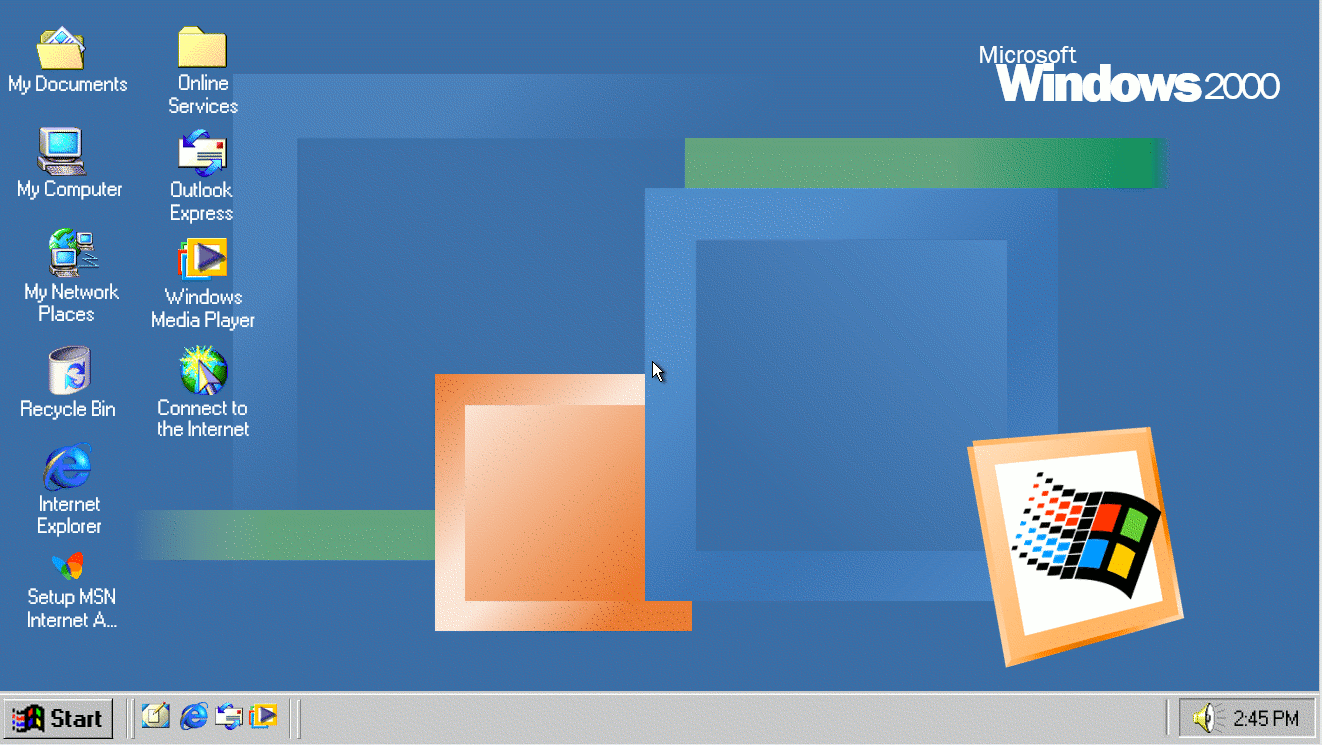
Gestalt Laws is useful when tidying your computer desktop ! You can arrange the icons of the desktop however you want. I personaly like to keep related apps close to each others. This is an example of the law of Common-region, though this is not done automatically.
Dark Design Patterns#
Video games often use some dark patterns to either keep the players on the game, or even to get them to spend money. For example, the Daily Login Reward mechanic rewards the player for each consecutive day they log onto the game, making sure they open the app every day. A more sound approach to this would be to reward the user for playing regularly without imposing this daily login rule. The player could choose how often they intend to play the game, and still get a reward.

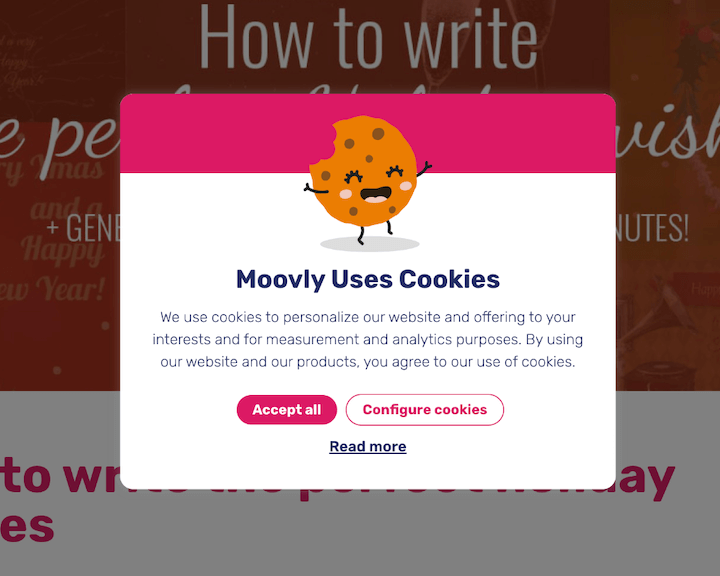
Many websites use cookies and want their user to accept them. To do this, they use tactics to make it harder for the user to refuse them. It is mostly done through interface interference and obstruction, as the user can accept all cookies with a single click, but if they want to refuse them, several clicks are required. This would be simply fixed with a “reject all cookies” button, but it would require the website to be more honest and not want to trick the user in the first place.